
Flea Control Services in Southeast Michigan
Professional Pest Control for Fleas That Gets to the Source
A flea infestation is one of the most frustrating pest problems a Michigan homeowner can face. Fleas reproduce rapidly, hide throughout your home in carpets, rugs, furniture, and pet bedding, and are notoriously difficult to eliminate without professional flea treatments that address every stage of the flea life cycle. By the time you notice adult fleas jumping on your pets or biting your lower legs, the infestation is already well established.
Defender Pest provides professional pest control for fleas across Southeast Michigan. Our flea control approach targets adult fleas, flea eggs, larvae, and flea pupae throughout your home and yard, delivering complete elimination rather than temporary relief.
Why Fleas Are More Than Just a Nuisance
The Health Risks of a Flea Infestation
Fleas are parasites that feed on the blood of warm-blooded animals including dogs, cats, and humans. Beyond the discomfort of flea bites, fleas transmit diseases and pose real health risks to your entire household.
Flea-Borne Diseases
Fleas are known to transmit diseases including murine typhus, a bacterial illness spread through flea feces that can cause fever, headache, and rash in humans. Fleas also carry bacteria that can cause cat scratch disease, and they are intermediate hosts for tapeworms that can infect both pets and humans. Controlling fleas is not just about stopping the itching — it is about protecting the health of your family and pets.
Tapeworms
Dogs and cats can ingest fleas while grooming, which is one of the primary ways pets become infected with tapeworms. If you notice small, rice-like segments near your pet's tail or in their bedding, tapeworms may be present. Consult your veterinarian if you suspect your pet has tapeworms alongside a flea infestation.
Allergic Reactions
Many dogs, cats, and humans develop allergic reactions to flea bites. Flea allergy dermatitis is one of the most common skin conditions in dogs and cats, causing intense itching, hair loss, and skin irritation from a single flea bite in sensitive animals. Severe infestations can cause anemia in young or small pets from blood loss.
Understanding the Flea Life Cycle
Why Complete Elimination Requires Targeting Every Stage
Effective flea control requires understanding how fleas develop. The flea life cycle has four stages — egg, larvae, flea pupae, and adult — and each stage requires a different approach to eliminate fleas completely.
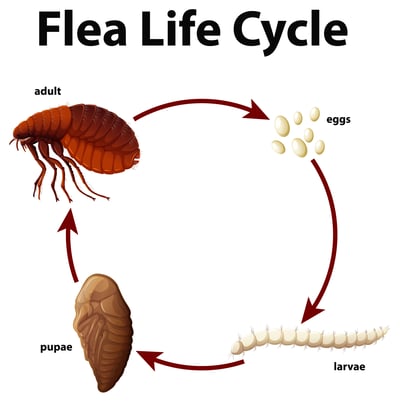
Eggs: Adult fleas lay eggs on the host animal, but the eggs quickly fall off into carpets, rugs, furniture, pet bedding, and anywhere pets spend time indoors or outdoors. A single female flea can lay dozens of eggs per day, meaning flea egg populations build rapidly throughout the home.
Larvae: Flea eggs hatch into larvae that feed on organic debris including flea feces in the environment. Larvae avoid light and burrow into carpet fibers, baseboards, and pet resting areas where they are difficult to reach with standard treatments.
Flea Pupae: Flea pupae are the most resilient stage of the flea life cycle. Encased in a sticky cocoon that adheres to carpet fibers and other surfaces, pupae are protected from insecticides and can remain dormant for months before emerging as adult fleas. This is why flea infestations often seem to recur after treatment — dormant pupae are hatching weeks after the initial application.
Adult Fleas: Adult fleas emerge from the pupae stage and immediately seek a host. Adult fleas are the stage most visible to homeowners and the primary source of flea bites. Kill adult fleas and remove adult fleas from your pets and environment, but without addressing the earlier stages, new adults will continue to emerge.
This is why professional pest control for fleas that uses insecticides alongside insect growth regulators is more effective than DIY flea control products that only kill adult fleas.
Signs of a Flea Infestation
- Flea dirt on pets or in pet bedding — flea feces resembles ground black pepper and is one of the most reliable signs of adult fleas on your pet. Place some on a damp white cloth and if it turns reddish brown, it is dried blood, confirming fleas are present.
- Flea bites on humans — typically small, red, and clustered around the lower legs and ankles
- Seeing fleas jump — adult fleas are visible to the naked eye and move quickly through fur, carpet fibers, and bedding
- Finding fleas on carpets or rugs — adult fleas can be spotted by walking across the carpet in white socks and checking for fleas that jump onto the fabric
How Defender Pest Treats Flea Infestations
Inspection and Assessment
Every flea control service begins with a thorough assessment of your home and yard. Our technicians identify the areas of heaviest flea activity including pet resting areas, carpets, rugs, furniture, baseboards, and outdoor areas where pets spend time. Understanding where flea populations are concentrated allows us to target treatments for maximum effectiveness.
Indoor Flea Treatment
We apply professional-grade insecticides and insect growth regulators to the interior of your home, targeting the areas where flea eggs, larvae, and adult fleas are most active. Insect growth regulators prevent flea eggs and larvae from developing into adult fleas, interrupting the flea life cycle and preventing the next generation from emerging. Treatments are applied to carpets, rugs, baseboards, furniture, and pet bedding areas with precision to kill fleas at every stage.
Outdoor Flea Treatment
Fleas do not only live indoors. Your yard, particularly the areas where pets spend time, can harbor significant flea populations. We treat outdoor areas including lawn borders, under decking, and shaded areas where fleas congregate. Eliminating flea populations outdoors prevents re-infestation from occurring immediately after indoor treatment.
Follow-Up Treatments
Because flea pupae are resistant to insecticides and can hatch weeks after the first application, follow-up flea treatments are an important part of complete elimination. Our technicians schedule follow-up visits to treat emerging adult fleas before they can reproduce and establish a new generation. If fleas return between scheduled treatments, we come back at no additional charge.
What You Can Do to Help Eliminate Fleas
- Vacuum carpets, rugs, and furniture thoroughly before treatment. Vacuuming before our visit removes adult fleas, flea eggs, larvae, and flea feces from carpet fibers and furniture surfaces, and stimulates flea pupae to hatch so they are exposed to treatment. Dispose of the vacuum bag or empty the canister immediately after vacuuming in a sealed bag outdoors.
- Wash all pet bedding in hot water. Washing pet bedding and any fabric the pet regularly contacts in hot soapy water kills fleas and removes flea eggs at all stages. Use the hottest water setting available. Repeat this every few days during treatment
- Wash removable furniture covers and throw rugs in hot soapy water. Any fabric items that pets spend time on should be laundered in hot water during the flea treatment period.
- Treat your pets. Professional flea control for your home works best when combined with veterinarian-recommended flea treatment for your pets. Our treatments address fleas in the environment, but re-infestation can occur if adult fleas on your pets are not addressed at the same time. Consult your veterinarian about the best flea control products including topical treatments, flea collars, and oral medications for your specific pets.
- Use a flea comb on your pets regularly. A flea comb is one of the most effective tools for removing adult fleas and flea feces from your pet's coat between treatments. Comb your pets over a white cloth or hot soapy water so any fleas or flea dirt are clearly visible and cannot escape.
Fleas Enter Homes More Ways Than You Think
Most homeowners associate fleas with dogs and cats, but fleas can enter your property from a wider range of animal hosts than many people realize. Squirrels, raccoons, and other wild animals that pass through your yard deposit flea eggs in the grass and soil that can later infect your pets and home. Even homes without pets can experience flea infestations if wildlife activity is present around the property.
Professional Flea Control Backed our Promise
Severe flea infestations require professional flea treatments to achieve complete elimination. DIY flea control products can reduce adult flea populations temporarily but rarely address the full flea life cycle or eliminate flea pupae in carpet fibers and baseboards. The result is a recurring infestation that frustrates homeowners for months.
Defender Pest backs every flea control service with our promise. We combine professional insecticides with insect growth regulators to eliminate fleas at every stage of the flea life cycle. If fleas return between treatments, we come back at no additional charge.
Frequently Asked Questions About Flea Control
How do I know if my pet has fleas?
The most reliable signs are excessive scratching or grooming, flea dirt in the coat, and flea bites on humans in the household. To find fleas, part your pet's fur in several areas and look for small, fast-moving dark insects. Use a flea comb over a damp white cloth and check for flea feces that turns reddish brown on contact with moisture. If you see any of these signs, contact Defender Pest for a professional assessment.
How long does it take to get rid of fleas completely?
Complete elimination of a flea infestation typically requires multiple treatments over several weeks due to the resilience of flea pupae. The first application kills adult fleas and interrupts larval development, but dormant pupae continue to hatch for weeks afterward. Our follow-up treatment schedule accounts for this timeline and ensures every stage of the flea life cycle is addressed before closing out the treatment.
Do I need to treat my pets and my home at the same time?
Yes. Treating your home without treating your pets allows fleas on your pets to re-infest the home immediately after treatment. Treating pets without treating the home leaves flea eggs, larvae, and pupae in the environment that will develop into new adult fleas. For complete elimination, both your home environment and your pets need to be treated simultaneously. Consult your veterinarian about the best flea treatment options for your specific pets alongside our professional home treatment.
Can fleas live in a home without pets?
Yes. Fleas can enter a home through infested secondhand furniture, clothing, or by hitching a ride on humans after contact with infested animals outdoors. Wild animals like squirrels and raccoons can deposit flea eggs in your yard that later make their way indoors. If you are experiencing flea bites indoors but do not have pets, a professional inspection is the best way to identify the source.