
Bettle Control Services in Southeast Michigan
Professional Beetle Pest Control for Homes, Lawns, and Gardens
Beetles are one of the most diverse groups of insects on the planet, and unfortunately several species cause serious problems for Michigan homeowners. From Japanese beetles stripping trees and ornamental landscaping to carpet beetles destroying fabrics and upholstered furniture indoors, beetle infestations require targeted beetle pest control that accounts for the specific species, their life cycle, and where they are causing damage.
Defender Pest provides professional beetle control services for residential and commercial customers across Southeast Michigan. Our licensed technicians identify the beetle species present, assess the extent of the infestation, and apply treatments designed to eliminate beetles at every stage of their life cycle.
Common Beetle Species in Southeast Michigan
Different beetle species cause different types of damage, target different areas of your home and lawn, and require different beetle control approaches. Most beetles that become pest problems fall into one of two categories: those that damage lawns, trees, and ornamental landscaping outdoors, and those that infest your living space indoors. Some do both.
Japanese Beetles
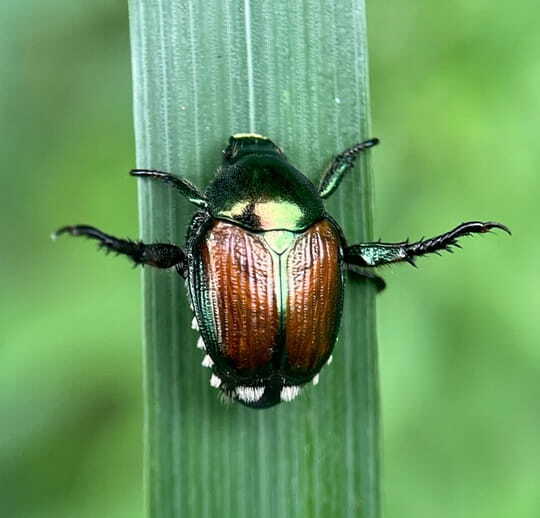
Japanese beetles are among the most destructive insects Michigan homeowners face. These invasive beetles cause damage at every stage of their life cycle, making them a year-round pest control concern. As larvae, Japanese beetles feed underground on the roots of lawn grasses, weakening and killing turf from below in patches that spread throughout summer. As adults, they emerge in early July and begin skeletonizing leaves, stripping trees and ornamental plants of their green tissue and leaving behind a lacy, dead canopy.
Japanese beetles are not selective feeders. They target more than 300 plant species including rose bushes, fruit trees, shade trees, and ornamental landscaping. A large adult Japanese beetle population can defoliate entire plants in a matter of days. Beetle infestations left untreated often require costly plant replacements and extensive lawn repair.
Effective Japanese beetle pest control targets both the larval stage in the soil and the adult stage above ground. Our licensed technicians apply proven insecticides including clothianidin, thiamethoxam, or imidacloprid during the first half of July when adult beetles are most active and most vulnerable to treatment. For properties at elevated risk or with a history of severe infestations, chlorantraniliprole applications between May and early July provide stronger early-season protection by targeting larvae before they develop into adults.
Carpet Beetles
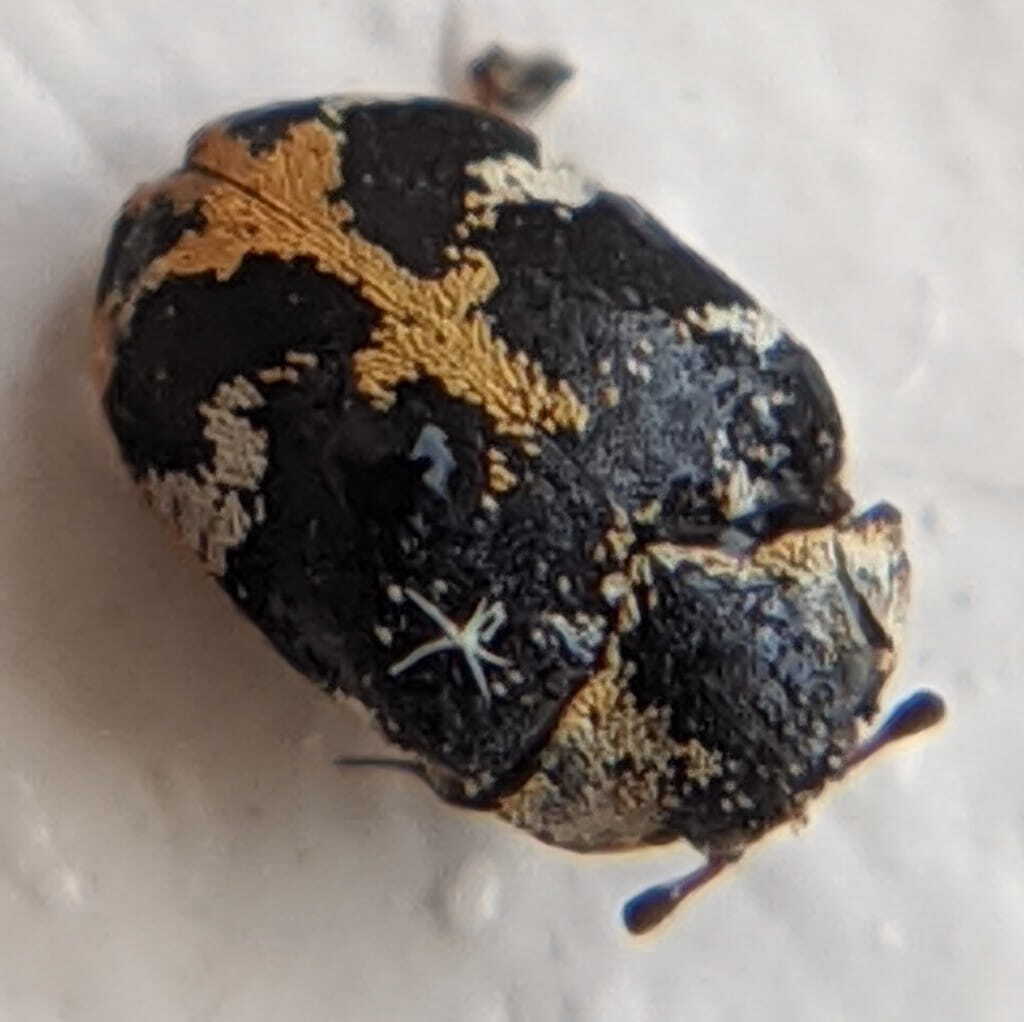
Carpet beetles are one of the most common and damaging indoor beetle species in Michigan homes. Adult carpet beetles are small, round insects that lay eggs in or near natural fiber materials. Their larvae are the primary source of damage, feeding on wool, silk, leather, fur, feathers, and other animal-based materials including upholstered furniture, rugs, clothing, and stored food items containing animal products.
Carpet beetle infestations often go undetected for months because the larvae avoid light and hide in hard to reach areas including wall voids, under furniture, in closets, and deep within carpet fibers. By the time homeowners notice irregular holes in fabrics or shed larval skins, the infestation is typically well established. Carpet beetles are also attracted to the keratin in human and pet hair, making pet bedding, furniture seams, and floor vents common infestation sites.
Effective carpet beetle control requires treating both the adult beetles and their larvae throughout the home. Treatments target hard to reach areas where larvae hide, including under furniture, along baseboards, in closets, and in wall voids. We also apply diatomaceous earth in key areas as a supplemental treatment that damages the exoskeleton of beetles and larvae on contact without chemical exposure.
Boxelder Beetles
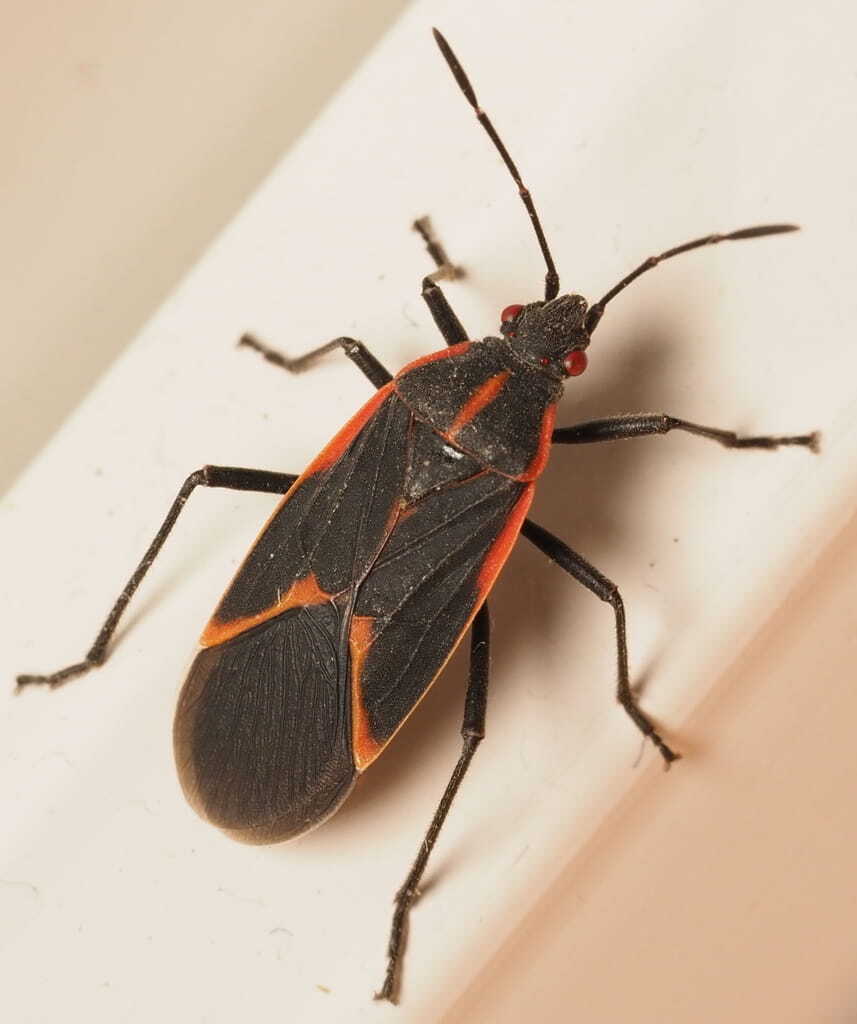
Boxelder beetles are brownish-black insects with distinctive red markings that are common in Southeast Michigan. They feed on ornamental landscaping, trees, and shrubs outdoors, draining fluids from leaves and causing yellowing and distortion. In fall, boxelder beetles become a household pest as they seek warmth inside homes, entering through gaps and cracks in large numbers and congregating on warm exterior surfaces.
While boxelder beetles do not cause structural damage indoors, a large infestation is a significant nuisance. Beetle pest control for boxelder beetles focuses on perimeter barrier treatments in fall before they attempt entry, combined with sealing the gaps and cracks in siding and foundations they use to access the home.
Multicolored Asian Lady Beetles
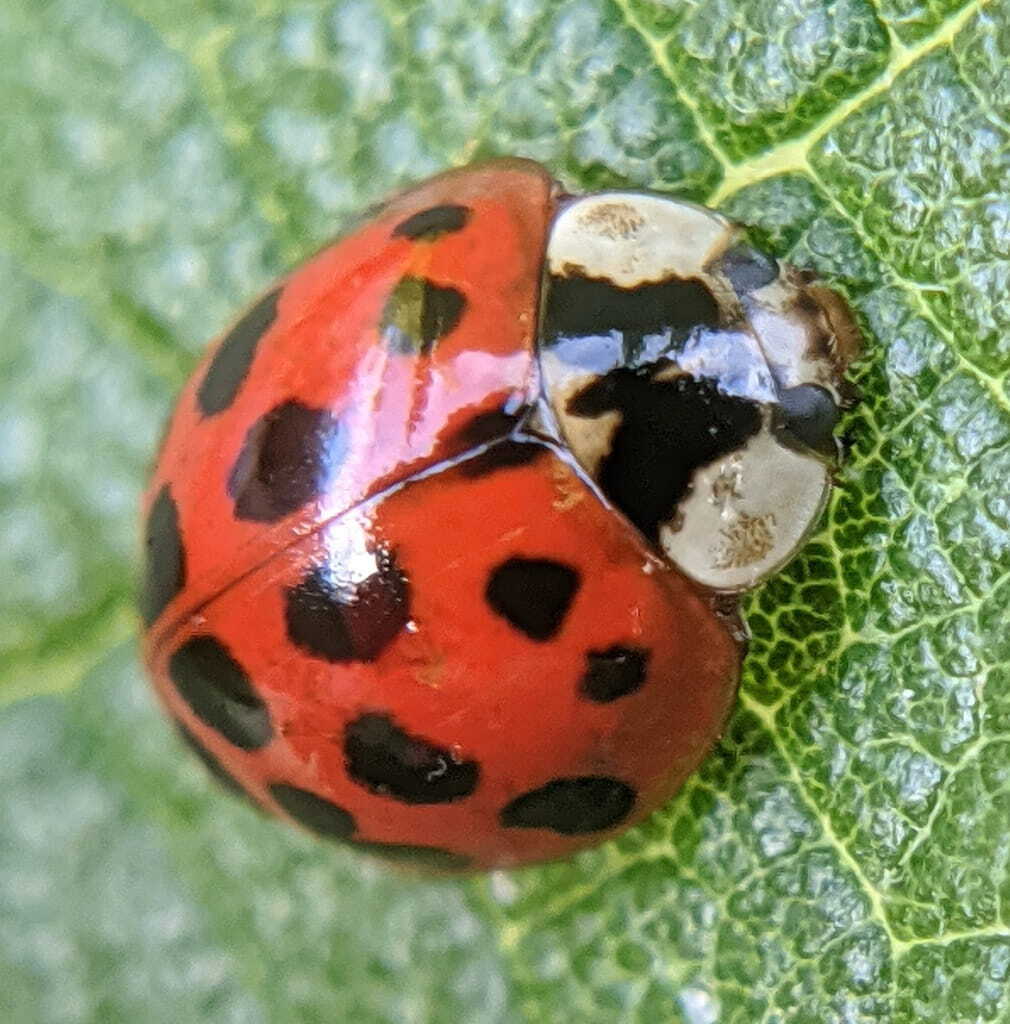
Multicolored Asian lady beetles are frequently mistaken for harmless ladybugs, but they behave very differently. Like boxelder beetles, they congregate in large numbers on the exterior of homes in fall as temperatures drop and attempt to overwinter inside wall voids and attics. They are attracted to light-colored structures and warm south-facing walls. Indoors, large populations create an unpleasant smell and can stain surfaces when disturbed or crushed.
Beetle pest control for multicolored Asian lady beetles focuses on exterior insecticide treatment in early fall before they establish inside the structure, combined with sealing entry points to prevent access.
Stored Product Beetles
Stored product beetles including grain beetles, flour beetles, and weevils infest pantry items and dry goods stored in the home. They enter through infested food products brought home from the grocery store and can spread quickly through stored grains, cereals, dried fruit, and pet food. Signs of a stored product beetle infestation include finding small beetles or larvae in food containers, fine powder or webbing in stored food, and an unusual smell from affected items.
Beetle control for stored product pests starts with identifying and discarding all infested food, followed by treatment of the pantry and storage areas. Maintaining cleanliness and storing dry goods in sealed airtight containers is the most effective prevention measure after treatment.
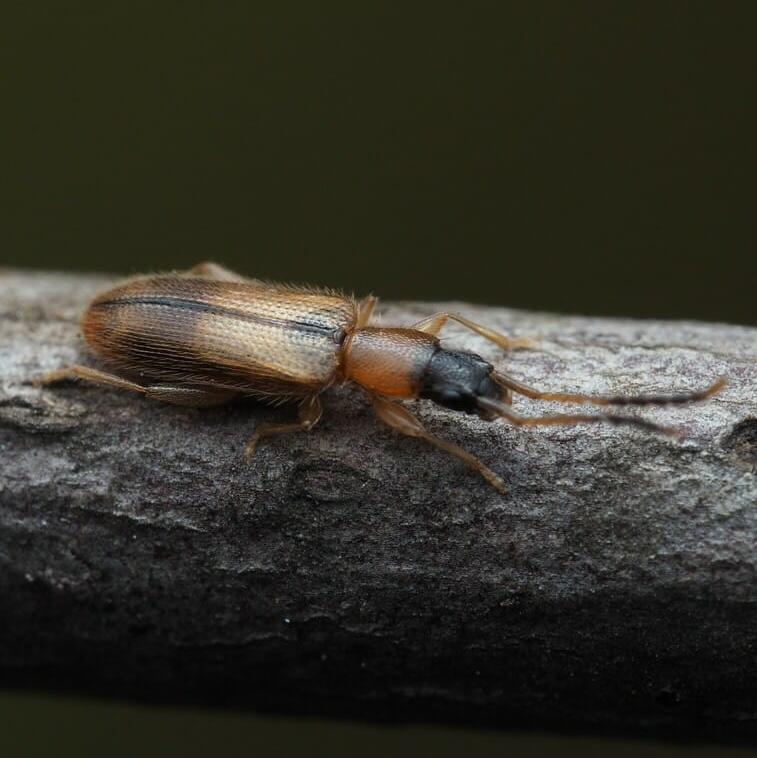
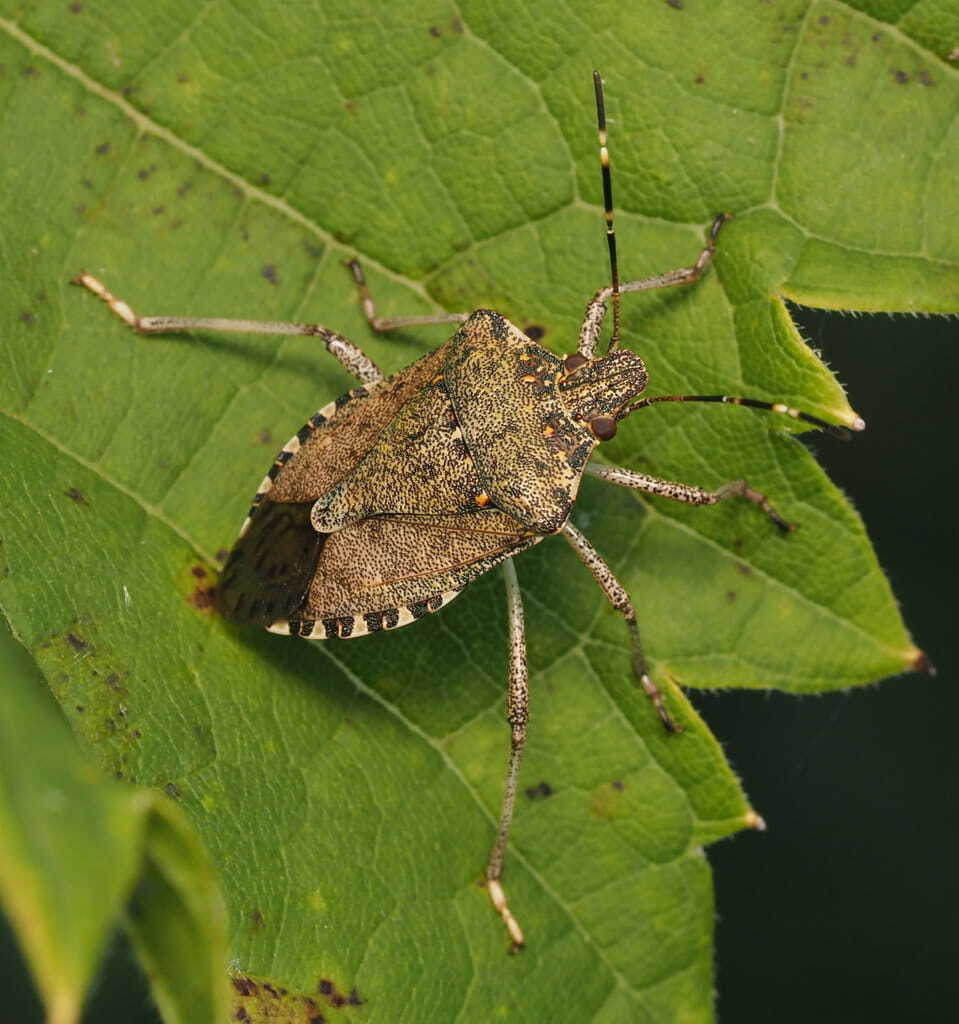
Stink Beetles
Stink beetles feed on flower bushes, fruit-bearing plants, and garden plants by piercing plant tissue and extracting fluids, causing stunted growth and deformed fruit. True to their name, they release a foul odor when disturbed. Stink beetles are more of a garden pest than a structural one, but heavy populations in ornamental landscaping and gardens warrant treatment to protect plants through the season.
Signs of a Beetle Infestation
Outdoors
- Irregular patches of dead or thinning turf in the lawn, particularly in summer, indicate Japanese beetle larval feeding on grass roots
- Skeletonized leaves on trees, shrubs, and ornamental plants with only the veins remaining
- Adult beetles visible on plants or congregating on the exterior of your home in late summer and fall
- Chewed or damaged roots found during lawn maintenance or when removing dead plants
Indoors
- Irregular holes in woolens, silk, leather, or upholstered furniture
- Shed larval skins or small beetles found in closets, under furniture, or along baseboards
- Small beetles or larvae found in stored food containers in the pantry
- An unusual smell from stored dry goods or from wall voids in fall
How Defender Pest Controls Beetles
Thorough Inspection and Species Identification
Every beetle pest control service begins with a thorough inspection of both the interior and exterior of your property. Identifying the specific beetle species is the first and most important step, as different types of beetles require completely different treatment approaches. Our technicians identify the species present, assess the extent of the infestation, locate larvae and egg sites, and document the entry points beetles are using to access your home.
Outdoor Beetle Control
For Japanese beetles, boxelder beetles, and other outdoor species, we apply professional-grade insecticides to lawns, trees, shrubs, and ornamental landscaping at the times of year when beetles are most vulnerable. Our targeted approach uses the active ingredient most appropriate for the beetle species and infestation stage, minimizing impact on beneficial insects and the surrounding environment while delivering fast knockdown of active beetle populations and long lasting protection through the treatment cycle.
For lawn grub control, we treat the soil directly to reach Japanese beetle larvae before they emerge as adults. Treating the larval stage is the most effective way to reduce adult beetle populations the following season and protect your lawn from the root feeding that causes patchy, dead turf.
Indoor Beetle Control
For carpet beetles and stored product beetles, we treat the living space with insecticides and diatomaceous earth targeted at the areas where larvae hide and feed. Hard to reach areas including wall voids, under furniture, in closets, and along baseboards receive focused treatment. We also treat gaps, cracks, and entry points in the structure to prevent new adults from entering from outdoors.
DIY Beetle Control vs. Professional Treatment
DIY beetle control products available to homeowners can reduce visible adult beetles but rarely reach the larvae hidden in carpet fibers, wall voids, soil, and hard to reach areas where beetle infestations are sustained. Without addressing the larval stage, beetles continue to emerge from eggs already laid throughout the property. Professional beetle pest control delivers access to commercial-grade insecticides, precise timing based on beetle life cycles, and the expertise to identify and treat the full extent of an infestation that DIY beetle control simply cannot match.
Preventing Beetle Infestations
- Seal entry points. Beetles enter homes through gaps in siding, foundation cracks, and openings around utility lines. Sealing cracks and gaps in the exterior of your home reduces the number of beetles that access wall voids and living spaces in fall.
- Maintain your lawn and landscaping. Healthy, well-maintained lawns and ornamental landscaping are more resistant to beetle damage. Proper irrigation, mowing height, and soil health all contribute to a lawn that recovers more quickly from Japanese beetle larval feeding.
- Store dry goods in sealed containers. Stored product beetles spread through unsecured food. Store grains, cereals, pet food, and dried goods in airtight containers and inspect new food products before storing them alongside existing items.
- Vacuum regularly and maintain cleanliness. Carpet beetles are attracted to pet hair, human hair, and natural fiber debris. Vacuuming carpets, rugs, and upholstered furniture regularly and maintaining cleanliness in closets and storage areas removes the food sources that sustain carpet beetle larvae.
Use window screens and door seals. Beetles enter homes most readily through gaps around windows and doors, particularly in fall. Well-fitted screens and door seals significantly reduce the number of beetles that enter from outdoors.
Professional Beetle Pest Control Backed by our Promise
Beetles cause real damage to Michigan homes and lawns, and effective beetle control requires identifying the right species, treating at the right time, and reaching the larvae that sustain the infestation in hard to reach areas. Defender Pest backs every beetle control service with our promise. If beetles return between scheduled treatments, we come back at no additional charge.
Our licensed technicians treat residential and commercial properties across Southeast Michigan with the expertise and commercial-grade products needed to eliminate beetle infestations and protect your home, lawn, and garden year-round.
Frequently Asked Questions About Beetle Control
How do I know if I have a Japanese beetle infestation in my lawn?
The most visible sign of Japanese beetle larval damage is irregular patches of brown, dead turf that pull up easily from the soil like a loose carpet, because the roots have been eaten away. You may also find white C-shaped grubs in the soil when digging or aerating the lawn. Adult Japanese beetle infestations are identifiable by the characteristic skeletonized leaves on trees and ornamental plants, leaving only the veins behind. Inspect your lawn and landscaping in June and July and contact us if you identify either of these signs.
Can carpet beetles damage my clothing and furniture?
Yes. Carpet beetle larvae feed on natural fibers including wool, silk, cotton, leather, and upholstered furniture. They hide in dark, undisturbed areas and cause damage that often goes unnoticed until significant destruction has occurred. Regularly inspecting stored clothing, vacuuming upholstered furniture and rugs, and washing fabrics in hot water can help identify and reduce carpet beetle populations between professional treatments.
Are the insecticides used for beetle control safe for my lawn, pets, and garden?
Yes. All products we apply are EPA-approved and applied by licensed professionals following all label directions. We select the active ingredient and application method appropriate for the beetle species and location, minimizing exposure to humans, pets, and beneficial insects. For gardens with edible plants and fruit, our technicians will advise on appropriate treatment options and any precautions specific to your situation.
When is the best time to treat for Japanese beetles?
The most effective treatment window for adult Japanese beetles is during the first half of July when populations peak and beetles are actively feeding. For larval control, chlorantraniliprole applications between May and early July target grubs in the soil before they develop into adults. Treating both stages provides the most comprehensive protection for your lawn and ornamental landscaping.